Video: Jill’s Advice for New Managers


 Funny mug, right? I found it at the dollar store and bought it to remind myself how easy it is for managers to persuade themselves they're right. But often, they're not. They find out through evaluations, conversations -- and sometimes confrontations -- that they're doing something wrong.
That's when managers who aspire to be great bosses do something important: they act on the feedback. They take the steps necessary to fix a problem they caused or a behavior that's getting in their way.

Those steps are the topic of my latest column on Poynter.org: When Bosses Fumble: Five Steps for Rebuilding Your Reputation. Just click on this link to read it.
And, for your listening pleasure, here's my companion podcast for the column:
 The media world was abuzz today at the announcement that Jeff Bezos, found of Amazon is purchasing the Washington Post. My faculty colleague Butch Ward (seen here with me in a seminar session) and I teach the topic of change management, and we both emphasize the importance of the leader's communication in times of change.
It shouldn't have surprised us, then, to discover that we both reacted in the same way when we read the memo Bezos sent to the Post staff about the historic news. We were so impressed that we wrote about it for our Institute's website, Poynter.org. Our editor combined them into one column that looks at the effectiveness of Bezos' words and why they are so much better than many management memos. I wrote:
When I’m teaching about leadership and change, one of the key change “accelerators” I invoke is communication. It’s a skill that many managers — even those in media — take for granted. At a time when emotions and uncertainty are high, when people are learning new things and letting go of the old, when people on the outside are questioning and the people on the inside want to believe they know the right answers — they turn to their leaders. Too often, they get management-speak that’s aimed at boardrooms, not boiler rooms, and certainly not to newsrooms filled with people who write for a living and know fluff when they read it.Butch wrote:
I don’t know what lies in store for The Washington Post. Maybe one day journalists will be quoting this memo for stories about failed strategies. But for today, it stands as an example of what to say when you want a room filled with nervous employees to believe.To see the Bezos memo -- and my paragraph by paragraph critique, just click on this link.
Welcome to the Aarhus studios and offices of DR - Danish Broadcasting.
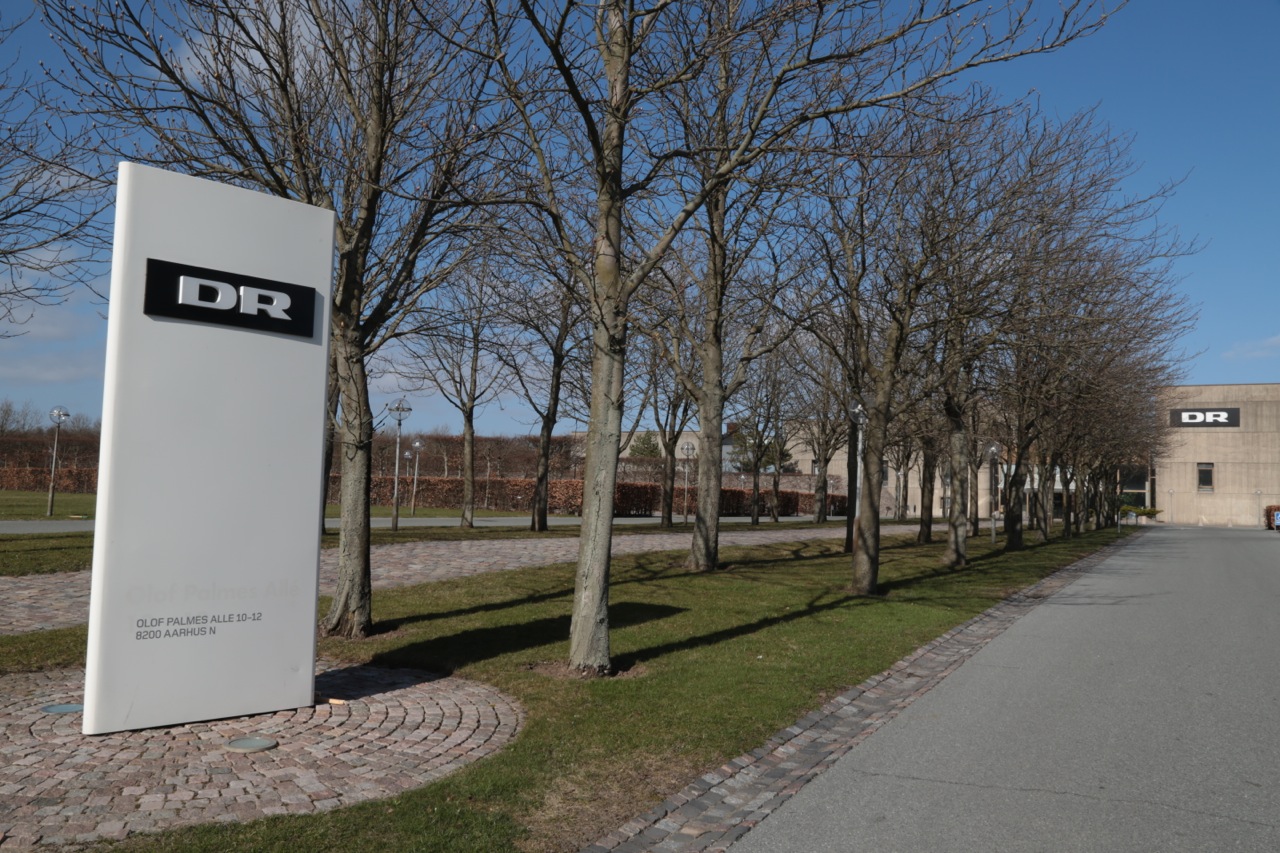
On a Friday morning in April, I spent the day there to teach about leadership and success. To say I was welcomed would be an understatement. Take a look at the front door! That poster, announcing my morning talk to the full staff, was not only there, but everywhere around the building.

I had been asked to talk to DR employees about a successful, creative and competitive workplace, with both the joys and the demands it places on people. In fact, the talk was titled "Surviving Success." The shot below is from the back of the gathering. I'm that tiny spot in the front right corner.

Fortunately, English is a second (or third or fourth!) language for many Danes, because my Danish is quite limited. It's so limited, I told the group, that I knew only a few Danish words: "tusen takk" -- which means "thank you very much" and "velkommen," which is "welcome." But for this day, I had learned a new and very powerful Danish word. Here it is:
The DR staff applauded my attempt to pronounce the word. (Sounds like "ah-BITES-glay-the") Later that day, I applauded their managers for their focus on leadership, during our daylong workshop.
 These are the top leaders of various aspects of DR's news and information programming. We talked about their values and how values lead to the choices they make every day as leaders. We focused on communication, collaboration and the development of successful and happy staff.
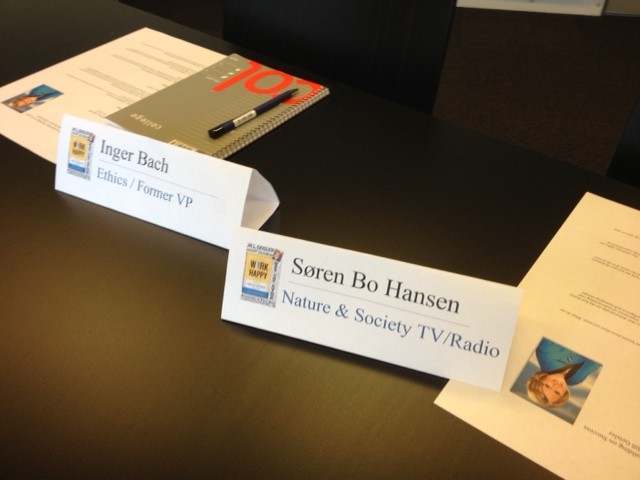 As you can tell from the extra care DR took to emphasize the positive, right down to putting an image of "WORK HAPPY: WHAT GREAT BOSSES KNOW" on the manager's name cards, the word "arbejdsglæde" might have been new to me, but it's in the leadership lexicon of this team.
Over the past ten years, the University has been at the fore of conversations about leadership and its impact on business, education, government and civic life. Stritch brings together people who care about leadership, problem-solving and success in a diverse society. I'm honored to be a featured speaker this year.
I hope I will see you for this special event. More information is below. Please use the following link to access the site for registration, tickets and other information: Helen Bader Leadership Speaker Series. (Links within the flyer below aren't active via this page.)

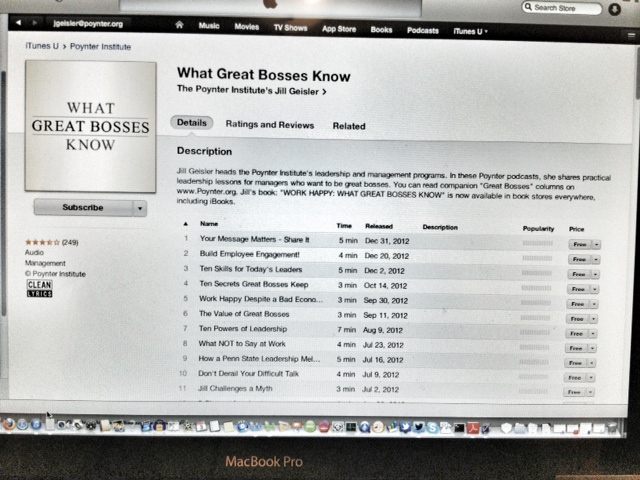 "WORK HAPPY: WHAT GREAT BOSSES KNOW" is a book that had its roots in a podcast. That podcast, "What Great Bosses Know," is available on iTunes U, which is the learning center on iTunes. All sorts of colleges, universities and academics post courses and collections there.
Apparently lots of people have found "What Great Bosses Know," according to the weekly download reports for 2012 that come to us from ITunes.
Because it's usually among the top ten podcast collections, I knew it had a following. But the final tally for 2102 was remarkable. Are you ready for the total? Drum roll, please:
 The production isn't sophisticated. My studio is wherever my laptop and I happen to be. This photo is from my home office, but I've recorded in many locations, including on the road when I'm away teaching or consulting.
The podcasts are brief, practical and conversational. People tell me they listen to them while driving to work and even while exercising. Perhaps the real secret to their popularity, though, is that they are FREE!
If you'd like to be among the 2013 downloaders, just click on this link and it will take you to iTunes U and the "What Great Bosses Know" podcasts. And of course, if you like what you learn by listening, just think what "WORK HAPPY: WHAT GREAT BOSSES KNOW" -- with its greater depth -- could do for you!
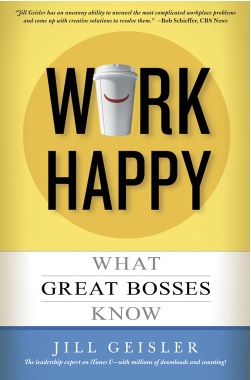 It's the time of the year that we look back on what we've accomplished and look ahead to setting goals for the future. With that in mind, I developed a column for Poynter.org to help you. I've been asked by so many people to help them focus on which of many leadership skills they should focus on in these times of change and challenge. And since change will now be a constant part of our lives, this list should be helpful (perhaps with some tweaks) a year from now, when it's once again time to take account of our achievements.
Here's hoping you'll have a great year ahead -- and that these ten skills will play a role in your leadership success. To read the column, just click on this link.
It's the time of the year that we look back on what we've accomplished and look ahead to setting goals for the future. With that in mind, I developed a column for Poynter.org to help you. I've been asked by so many people to help them focus on which of many leadership skills they should focus on in these times of change and challenge. And since change will now be a constant part of our lives, this list should be helpful (perhaps with some tweaks) a year from now, when it's once again time to take account of our achievements.
Here's hoping you'll have a great year ahead -- and that these ten skills will play a role in your leadership success. To read the column, just click on this link.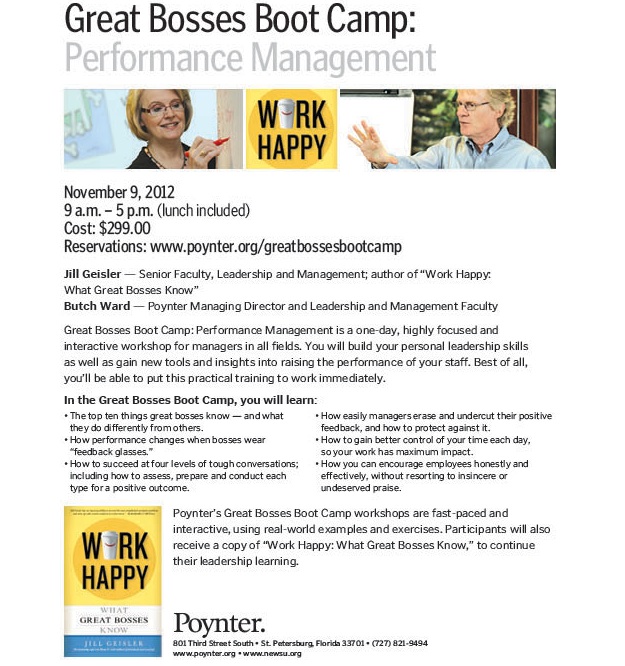 Want to boost your team's performance? Spend a great day at Poynter for our Great Bosses Boot Camp: Performance Management. My colleague Butch Ward and I will help you learn the secrets to providing the kind of feedback -- both positive and negative -- that employees say is lacking in most workplaces today.
Your day at Poynter will be one of the most interactive, fun and practical learning experiences of your management career. You'll learn skills you will be able to put to work immediately.
You can register for this program online. Here's a link to information and registration.
See you in November!
Want to boost your team's performance? Spend a great day at Poynter for our Great Bosses Boot Camp: Performance Management. My colleague Butch Ward and I will help you learn the secrets to providing the kind of feedback -- both positive and negative -- that employees say is lacking in most workplaces today.
Your day at Poynter will be one of the most interactive, fun and practical learning experiences of your management career. You'll learn skills you will be able to put to work immediately.
You can register for this program online. Here's a link to information and registration.
See you in November!
 My latest column on Poynter.org blows the cover on something many people don't know: Their bosses keep secrets from them. In fact, great bosses keep very specific secrets from employees. They do it not to be mysterious or misleading. They do it to help people. So, what are those secrets?
I made a list of ten of them for my latest "What Great Bosses Know" column on Poynter.org. I wrote it in recognition of a holiday I didn't even know existed: National Boss Day -- which the calendar (and greeting card companies) say is October 16.
Here's a link to the column. Perhaps, after reading it, you'll take a moment to thank a great boss, on October 16 -- or any day of the year.
My latest column on Poynter.org blows the cover on something many people don't know: Their bosses keep secrets from them. In fact, great bosses keep very specific secrets from employees. They do it not to be mysterious or misleading. They do it to help people. So, what are those secrets?
I made a list of ten of them for my latest "What Great Bosses Know" column on Poynter.org. I wrote it in recognition of a holiday I didn't even know existed: National Boss Day -- which the calendar (and greeting card companies) say is October 16.
Here's a link to the column. Perhaps, after reading it, you'll take a moment to thank a great boss, on October 16 -- or any day of the year. Gwen Moran, a columnist for Entrepreneur.com, recently contacted me to talk about "WORK HAPPY: WHAT GREAT BOSSES KNOW" and the lessons it holds for improving workplaces. From that interview, she developed a useful list of tips for managers who want to improve quality and productivity, by making the workplace better for employees. I like the way she synthesized some of the many pages of advice from the book into three key ingredients to a happy workplace:
© 2026 Work Happy: What Great Bosses Know. All Rights Reserved. Powered by WordPress. Designed by 