Archive | Uncategorized RSS feed for this section

In Addition to Writing the Book —

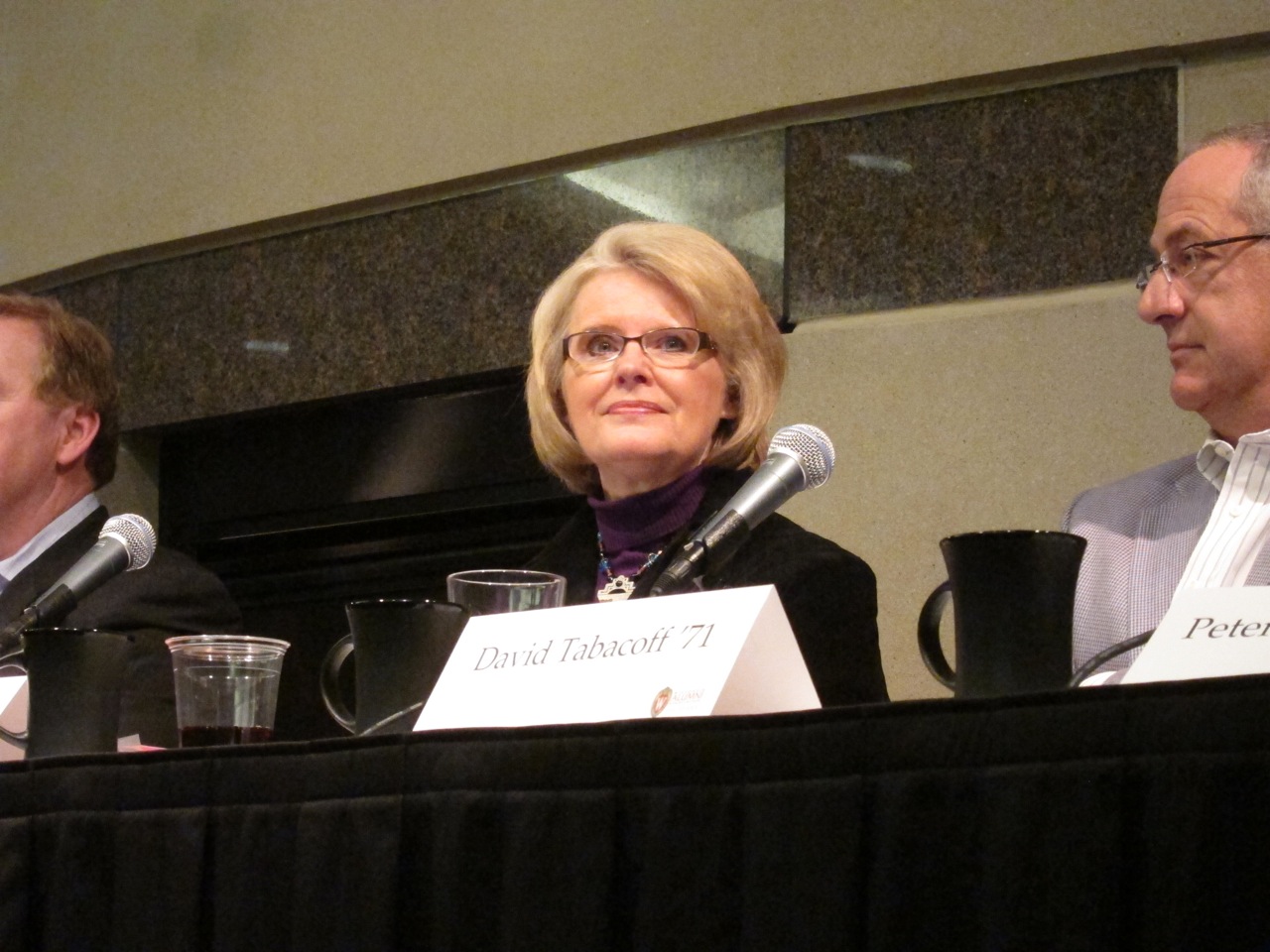
My work involves some interesting adventures. Today I took a break from writing to head to my alma mater, the University of Wisconsin-Madison.  I joined some fellow alums from the world of TV news to talk about the state of the media. On the panel with me were Jeff Greenfield (CBS), Chris Bury (ABC), David Tabacoff (FOX) and Peter Greenburg (CBS). We discussed the changing technology, viewer habits, new distribution systems for news, painful budget and staff cuts in the industry -- and the importance of ethic and critical thinking for journalists and viewers alike.
Read More

Want to Be a Better Communicator?

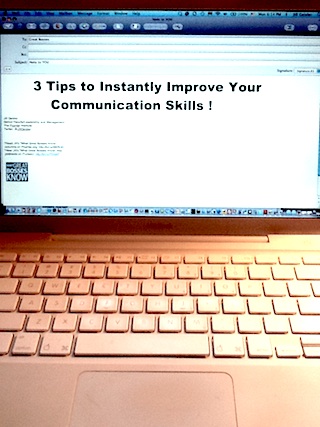
I've rarely met managers who assume they are terrific at communication.  Smart ones recognize that they aren't the best judges of their skills -- the people who work for them are.  Even the best-intentioned bosses discover that they're missing the mark or causing problems because they're overlooking some opportunities to get their messages across loud and clear. That's why I penned a column for Poynter.org, offering three tips that you can put to work right now -- and they can immediately improve your effectiveness.  There's a companion podcast, too. Feel free to click here to access both.  Feel free to let me know what you think!
Read More

The Value of Overcommunication

There's an old expression: "Tell them what you're going to tell 'em.  Tell 'em.  Then tell 'em what you told 'em."  The thought is that a speaker needs to be perfectly clear as a communicator. It's especially important for bosses. But  how much communication is too much?   After a verbal request or instruction, should you send a memo or two, make a follow-up call, send a text? New research reported by the Harvard Business School finds that redundant communication is especially important for managers who are working on collaborative projects -- where they don't have supervisory authority over all of the employees. Here's what one of the researchers, Tsedal B. Neelye says:
Managers lacking direct power, however, assumed nothing. They proactively used redundant communication to convince team members that their project was under threat and that they needed to be part of the solution. "Those without power were much more strategic, much more thoughtful about greasing the wheel" to get buy-in and to reinforce the urgency of the previous communication, Neeley says. "Managers without authority enroll others to make sense of an issue together and go for a solution."
It turns out that even among powerful managers, clarity is nice -- but redundancy in communication seems to get the job done best.  Let me say that again: redundancy is valuable!  
Read More

Great Bosses Surprise – #1!

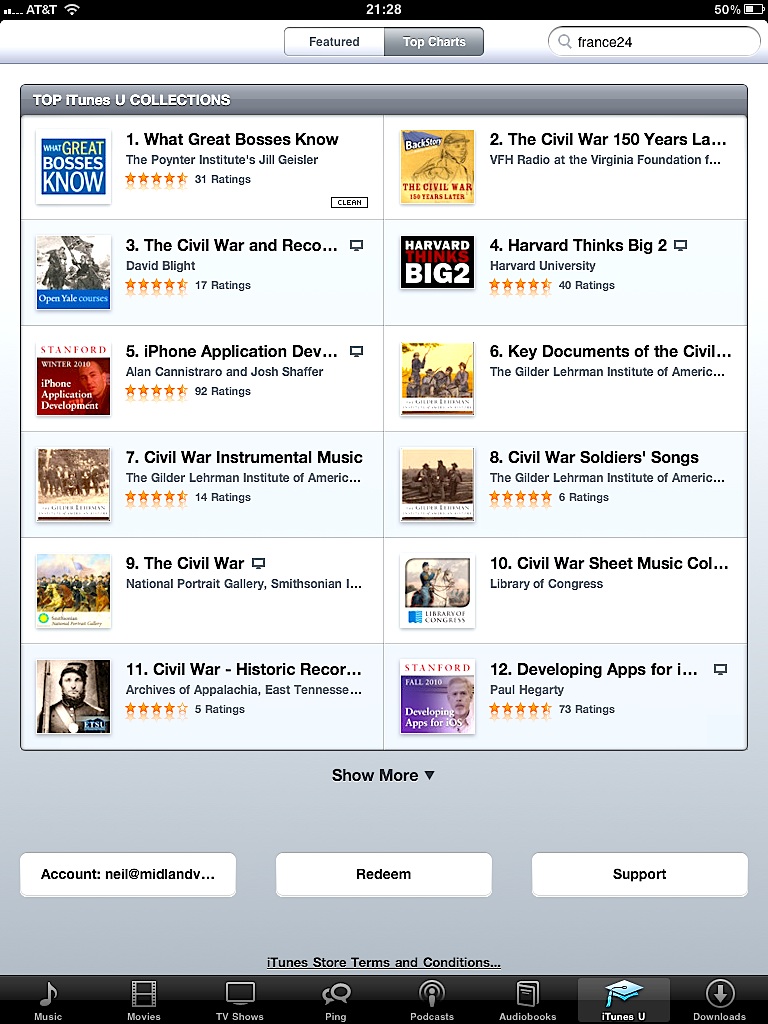
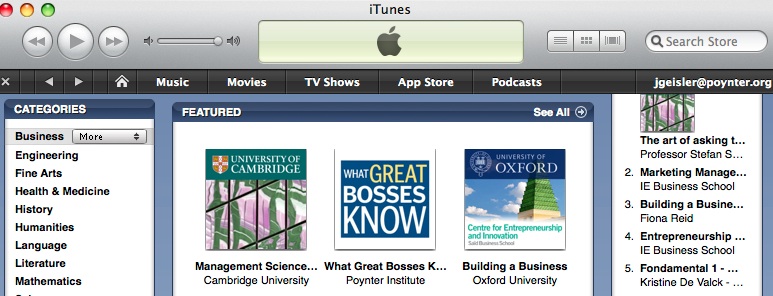
What a terrific surprise!  Today, I opened up iTunesU on my iPad -- and checked out the Top iTunesU Collections rankings.  "What Great Bosses Know" was at the top of the list! Thanks to everyone who downloads these quick learning lessons -- and to those of you who have left kind comments about the help they're providing you.  I enjoy hearing from people from all parts of the world, in all professions, about their leadership challenges. If you haven't heard the podcasts, you can find them on iTunesU. I've also built a link here into the Great Bosses site. All you need to do is click on these highlighted words and you'll get there. The real thrill of now writing the book about what great bosses know is the ability to provide so many more insights, lessons, tips -- and even quizzes -- that can help leaders build great workplaces.    
Read More

Laughing with (and even at) the Boss

Great bosses understand the value of laughter in the workplace. Not humor that demeans and excludes, just good-natured fun.  Since  bosses are the ones who often raise the stress level in an organization -- asking people to do more with less, or cutting budgets, or rocking the boat with changes --they ought to pay special attention to keeping spirits up. Not every leader has a natural gift for unleashing laughter -- or building a culture where fun is the norm.  So let me tell you about one who definitely does. His name is Jim Naughton, and he's the past president of the Poynter Institute.  He's retired now, and has just written a memoir of his professional life and his love of laughter at work.  It's called 46 Frogs: Tales of a Serial Prankster. Several of us at Poynter have written about Jim's many pranks and merry adventures -- and what they mean to leaders.   You can see those stories on the Poynter website.  I hope YOU have the opportunity to work for, laugh with -- and even become -- a leader who cares about fun at work.
Read More

What Great Bosses Know – Podcasts on iTunesU

  We're nearing the 100  mark in "What Great Bosses Know" free podcasts on iTunesU. We started posting them in January of 2010.  Apple reports we've had well over 3 million downloads. Technology makes it easy for me to record them wherever I may be -- in my home office, at Poynter, or teaching on the road.  I use my MacBook laptop and a software program called Audacity. Because my first career was in broadcast journalism, where "live" reporting was essential, I'm able to ad lib these podcasts from notes and columns, rather than read a script. I much prefer the informal, conversational approach to both the podcasts and my teaching. Since we launched the free podcasts, I've heard from managers all across the world, in an amazing array of professions. Through technology, I've become the coach to thousands of people I've never met in person. I'm writing the "What Great Bosses Know" book for them -- and for everyone who wants to improve work and workplaces.  So, enjoy the podcasts.  I hope they whet your appetite for the book to come!  If you have topics you'd like me to cover in future podcasts, feel free to send me an email: jgeisler@poynter.org



Read More

Micromanagers and Motivation: The Dangerous Mix

The easiest way to define a micromanager is "an overly bossy boss."  A micromanager can take the joy out of work and kill motivation of the staff. For employees, the boss acts like the legend on this coffee mug -- someone who is convinced he or she is the keeper of all great ideas. That's why one of the greatest challenges for a manager is figuring out when vigilance about quality and  the time-honored "keeping a hand in things" -- crosses the line into serious and problematic micromanagement. And it's why understanding motivation is so important for bosses who want to have both quality, a connection to the work, and employees who are really engaged. As I'm writing a book about "WHAT GREAT BOSSES KNOW," I am paying special attention to research in the field of motivation, and I'll share it.  Meanwhile, here is a link to one of my past columns on motivation on Poynter.org.  I hope it's helpful to you. Now I have to get back to writing the book!  
Read More

Can a Boss Be Too Nice?

We've all heard about or (ouch!) may have worked for a boss who seemed to care more about the product than the people in the organization.  That's why so many of the best bosses are known for being considerate and collegial. But can there be too much sweetness and light in one's approach to management?  Can a boss be too nice?  Having seen feedback on hundreds of bosses, I can attest that it's more than possible -- it is fairly common.  So what's the big problem with a too-nice boss?  I can think of at least seven. Take a look at my column on Poynter.org: What Great Bosses Know about The Seven Deadly Sins of a Too-Nice Boss. You can also download all of my What Great Bosses Know podcasts -- for free -- on iTunesU. Most important, the "WHAT GREAT BOSSES KNOW" book will give you tips to help you find the best approach to leading your team.  I'm working on that book right now!
Read More

Difficult Conversations – Jill’s Free Online Course on Poynter’s News University

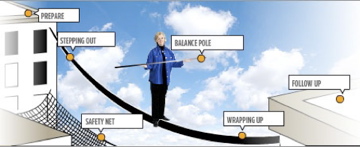
Do you shy away from tough conversations with employees? Or, have you been told you come on too strong? If you want to be a great boss, you need to master the challenge of difficult conversations. I've developed an online course that helps you "walk the tightrope" of a tough talk -- from preparation to followup. It's a fun, free and interactive course on Poynter's e-learning site, News University.  It features practical advice, video examples, and quick quizzes. You'll  learn about your approach to conflict and how to have a more successful outcome for everyone involved! Just click here to check it out:        
Read More

Can You Change an Organization’s Culture?

The answer is yes -- but it's not an easy process. It's a lot more than redecorating with some cheery flowers or writing a nifty new mission statement. Great bosses know it is a process. They do it intentionally.  Some reasons to change a culture:  to make it more productive, , more family-friendly, more innovative, more customer focused,  more team-oriented, more diverse, or less hierarchical and bureaucratic, less turf-protective, or less risk-averse. Want to learn more about how to change a culture?  Just click on this link to my column and podcast on Poynter.org -- and let me know what you think!
Read More