Archive by Author

Presenting: The Brazilian Edition – in Portuguese!

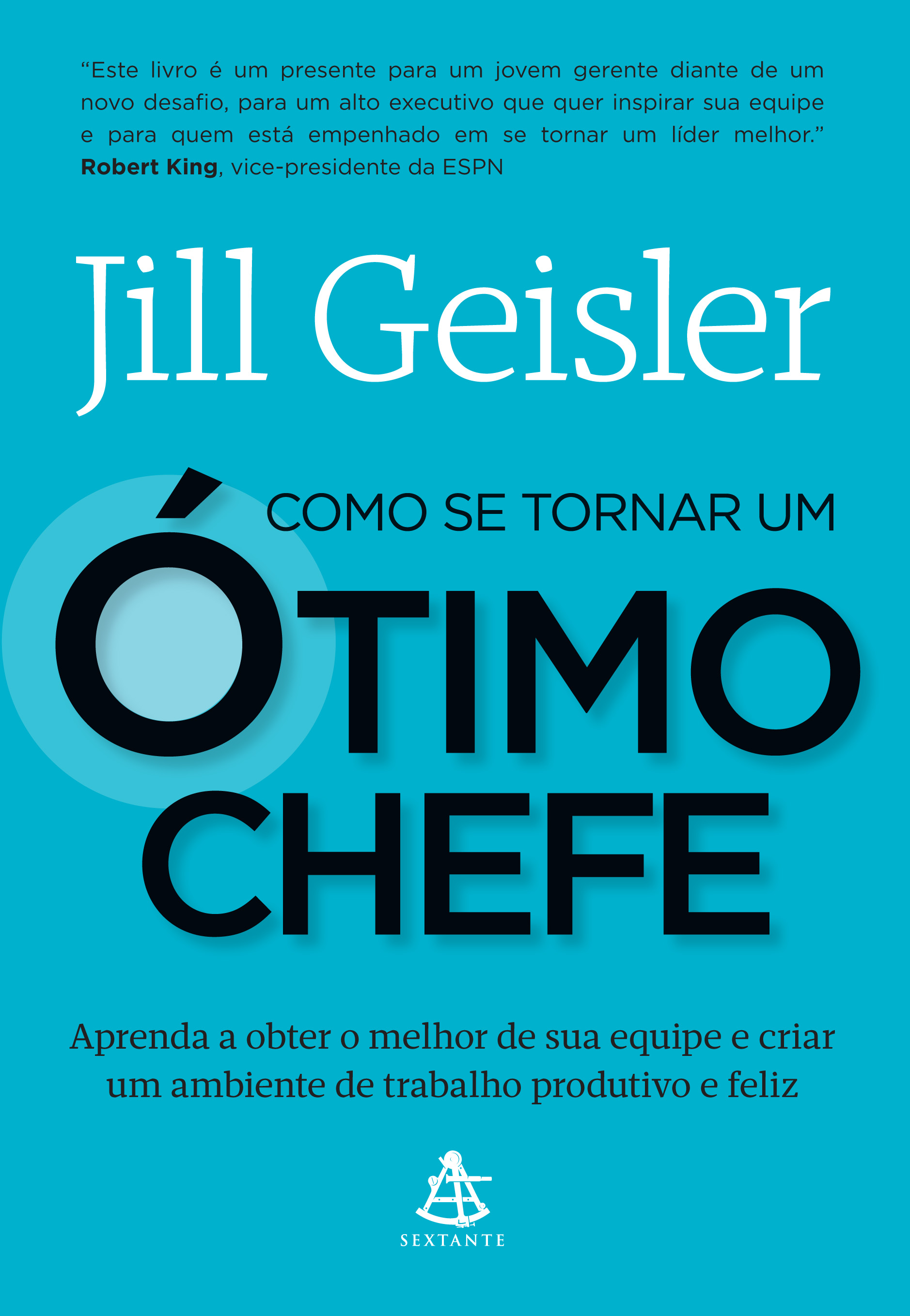
ComoSeTornarOtimoChefe_IMPRENSAYou are looking at the Portuguese edition of "Work Happy: What Great Bosses Know," which will be released next week in Brazil.  Translated, the new title of the book is "How to Be a Great Boss." It's direct and straightforward, isn't it?


The cover copy says: "How to get the best from your team and create and productive and happy work environment."


I like the idea of making a direct promise like that, because I know the book will truly help managers learn how to work their way to a higher level of performance, one that helps their teams do their best work.


I will be doing some interviews with Brazilian media about the book.  Should be interesting!  Over the years, I've heard from Brazilian managers who listened to my "What Great Bosses Know" podcasts. But those are in English. Now the advice is available in their native tongue. Just wish I could speak it, too!
Read More

Why Can’t All Leaders Communicate Like Jeff Bezos?

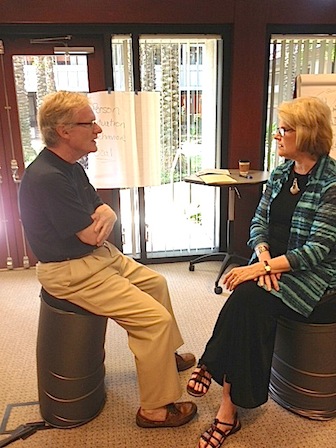
BWJGDCThe media world was abuzz today at the announcement that Jeff Bezos, found of Amazon is purchasing the Washington Post.  My faculty colleague Butch Ward (seen here with me in a seminar session) and I teach the topic of change management, and we both emphasize the importance of the leader's communication in times of change.


It shouldn't have surprised us, then, to discover that we both reacted in the same way when we read the memo Bezos sent to the Post staff about the historic news.  We were so impressed that we wrote about it for our Institute's website, Poynter.org.  Our editor combined them into one column that looks at the effectiveness of Bezos' words and why they are so much better than many management memos. I wrote:
When I’m teaching about leadership and change, one of the key change “accelerators” I invoke is communication. It’s a skill that many managers — even those in media — take for granted. At a time when emotions and uncertainty are high, when people are learning new things and letting go of the old, when people on the outside are questioning and the people on the inside want to believe they know the right answers — they turn to their leaders. Too often, they get management-speak that’s aimed at boardrooms, not boiler rooms, and certainly not to newsrooms filled with people who write for a living and know fluff when they read it.
Butch wrote:
I don’t know what lies in store for The Washington Post. Maybe one day journalists will be quoting this memo for stories about failed strategies. But for today, it stands as an example of what to say when you want a room filled with nervous employees to believe.
To see the Bezos memo -- and my paragraph by paragraph critique,  just click on this link.  
Read More

Top Spot on iTunes U: Jill Geisler’s “What Great Bosses Know” Podcasts

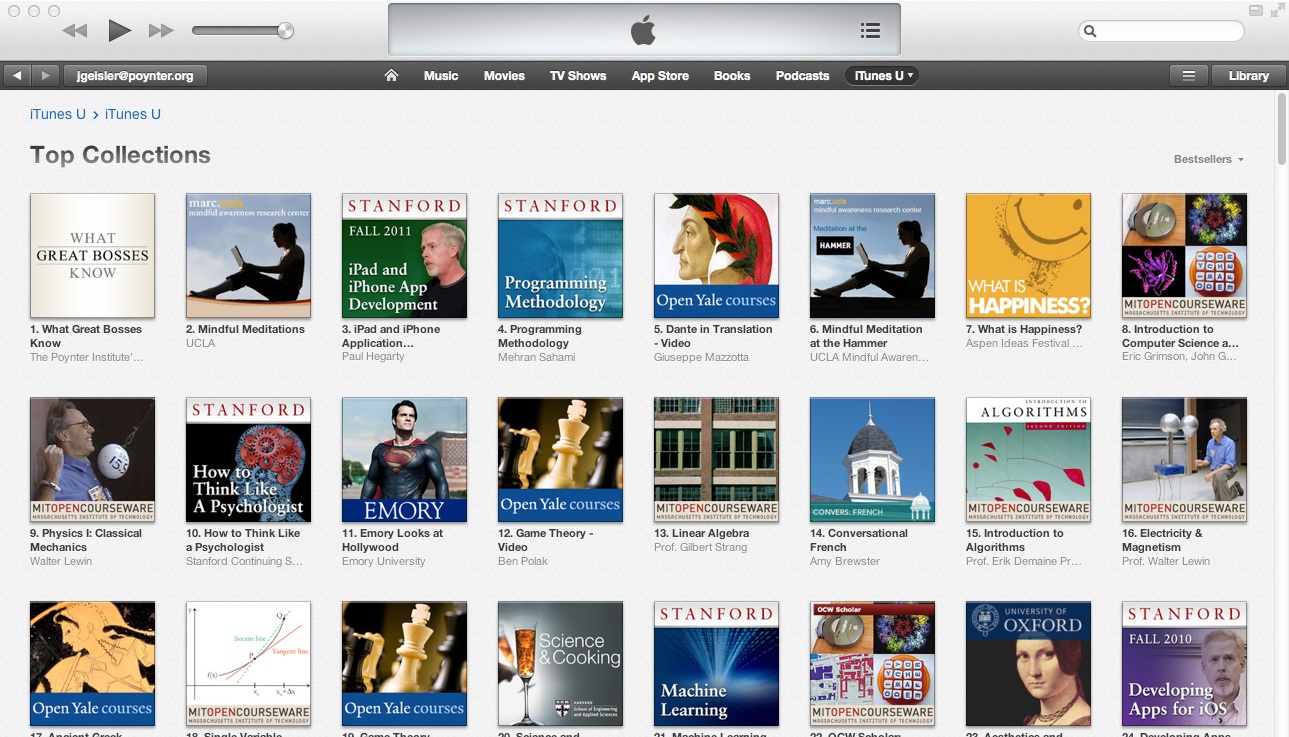
ItunesUJune30It's always a delight to see this on iTunes U.  Once again this week, the "What Great Bosses Know" podcasts are ranked #1 among the many wonderful educational collections on the site.

We began posting the podcasts in 2010.  It was the popularity of these brief, practical audio lessons that led to the book contract for "WORK HAPPY: WHAT GREAT BOSSES KNOW."

As of today, there are 129 different topics in the collection.  According to the statistics provided by the site, most people use their phones or iPads to download them.  When I wrote the book, I tried to use the same tone I bring to the podcasts.  Leadership shouldn't be a lecture when it can be a conversation.

WGBKiTunesUIf you'd like to download the "What Great Bosses Know" podcasts, just click on this link.

And if you have topics you'd like me to cover in future podcasts, feel free to send your ideas my way!

Read More

How Great Bosses Close “The Feedback Gap”

9781455507436_154X233One of the most important and underutilized management tools is feedback.  That's why I devote several chapters of "WORK HAPPY: WHAT GREAT BOSSES KNOW" to feedback of all varieties and how to deliver it.

I define feedback as:

Information with Intent to Influence

Just think about all the things feedback can influence: productivity, quality, motivation, morale, team-building, relationships, and risk-taking. When you consider that, it's a shame employees say time and again that they're hungry for feedback but fail to get it.

In a column and podcast today for Poynter.org, I share advice on how to close the feedback gap.  Just click on this link -- and feel free to send me YOUR feedback! -- Jill

     
Read More

Great Bosses and Tough Talks

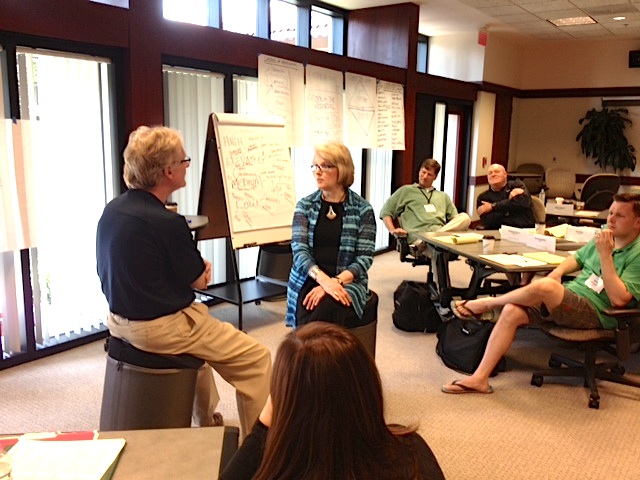
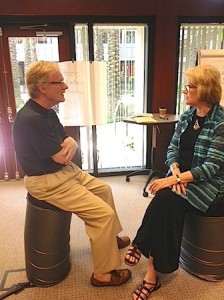
BWJGDCThis is a scene you'll see in most of our leadership seminars. It's practice drill in a session on difficult conversations.  In this case, my seminar co-leader Butch Ward is in the role of the manager, and I'm the employee.


We know that most managers come to their jobs without training in having tough talks -- and few of us enjoy doing them.  When we ask a class who has a difficult conversation pending right now at work, the majority of managers raise their hands.

  That's not entirely surprising. People defer them for a variety of reasons: Not enough time to prepare, too much fear of doing it wrong, too little confidence that things will get better. That's why we practice them in our workshops and seminars, using real-world scenarios relevant to our participants' daily lives.  In fact, they dream up the case studies. Butch and I model a few at the start, then turn things over to other to give it a try.
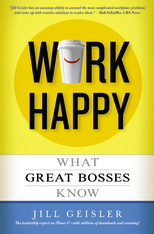
  9781455507436_154X233If you are one of those managers who'd like to get better at tough talks, you'll be happy to know that there's an entire chapter dedicated to the topic in "WORK HAPPY: WHAT GREAT BOSSES KNOW."

  I share a process for preparing, initiating, conducting, wrapping up and following up on difficult conversations.

  But I want to make sure that you are equally proficient at positive feedback.  It's the foundation of your strong relationship with staff and it establishes your credibility when you have to approach someone about a problem or concern. You're not just a negative nitpicker.

  You're a boss who never misses a chance to share information, reinforce effort, show appreciation, offer encouragement, deliver praise and happily celebrate your team's accomplishments.  At the same time, you hold people accountable and let them know where they stand.  So yes, there's a chapter on positive feedback as well!
  WGBKiTunesUIf you'd like additional resources, feel free to check out  the "What Great Bosses Know" podcasts on iTunes U. You'll find free podcasts on feedback of all kinds, along with a library of topics covering the everyday situations managers face.

NewsUThere's also a free online course on Poynter's e-learning site, NewsU.  Just click on this link to get to my difficult conversations course.

  But even if you read the book, listen to the podcasts and take the online course, I strongly BWJGDCWiderecommend that you test-drive a difficult conversation or two with another manager.  If the talk is especially serious or challenging, you might want to ask your supervisor to do a run-through with you. It may seem odd or even hokey at first.  But trust me, it helps you avoid surprises and errors.
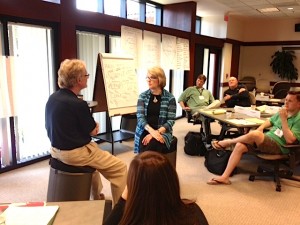
  In fact, people tell us the tough talk practice is among the most useful and practical things they learn in our programs.  And it helps them become great bosses.
 

Read More

How Great Bosses Build Top Workplaces: The Milwaukee Journal Sentinel’s Q&A with Jill Geisler

TWP_Milwaukee_2013-660The Milwaukee Journal Sentinel just published a special section focused on strong and healthy workplaces in southeastern Wisconsin. There are clear distinguishing qualities that set the best apart.  

To help identify and illustrate the leadership aspects of great workplaces, the editors asked me to take part in a Q & A, based on many of the lessons in "WORK HAPPY: WHAT GREAT BOSSES KNOW." Since it's my hometown paper, you can imagine how happy I was to oblige:  

The interviewer asks:
Q: In your book, you talk of the five "symptoms" of a healthy workplace culture. What are they, and what makes them healthy? A: In a healthy workplace culture: Employees know it's not a democracy, but their voices matter. When employees feel they can offer ideas and be heard, they are happier at work - even if they don't get to make all the final decisions.
For the the rest of the symptoms and many more tips, here's a link to the "Top Workplaces" special section.  
Read More

Great Bosses Cultivate Great Ideas

NewNPRHQI'm in Washington, DC this week, teaching workshops at NPR. Folks here have just moved into a beautiful new building. It's not just a state-of-the-art workspace. It's also designed to bring many creative people together for better opportunities to think and collaborate.

That's important here, for sure, because public radio is built on ideas. But every good organization wants to capture and cultivate good proposals, plans, thoughts, suggestions. It works best when leaders understand how to cultivate great ideas. How to make it easy and effective to pitch, catch and coach them.

In preparation for the teaching, I immersed myself in a good amount of literature about brainstorming, collaboration and innovation.  I turned that into a column and podcast for Poynter.org, titled "Don't Be an Idea Killer: Ten Tips for Cultivating Good Ideas."   Here's how I begin:

Some of our best ideas come when we’re taking a break from concentration. At least, that’s what recent research says. Since the concept for this column coalesced while I was sweating my way through a Zumba class, I’m prepared to believe it.

I’d been doing a lot of reading about the cultivation of ideas — especially the leader’s role in brainstorming, creativity and innovation. I collected insights and advice from all sorts of experts to use in my teaching. I wanted to craft a column, too, but kept debating with myself about the framing.

Not surprisingly, my breakthrough came when I stopped fretting and shifted my focus to enjoying some music and keeping pace with the class leader.

And here's a link to the full column and all ten tips.

Read More
Video

Leadership Styles: A Video Lesson

We've had thousands of views of this video on Leadership Styles. It's a short form of a much more in-depth video tutorial on Poynter's NewsU.  Hope you enjoy!

Happy to Say “Arbejdsglæde” in Aarhus!

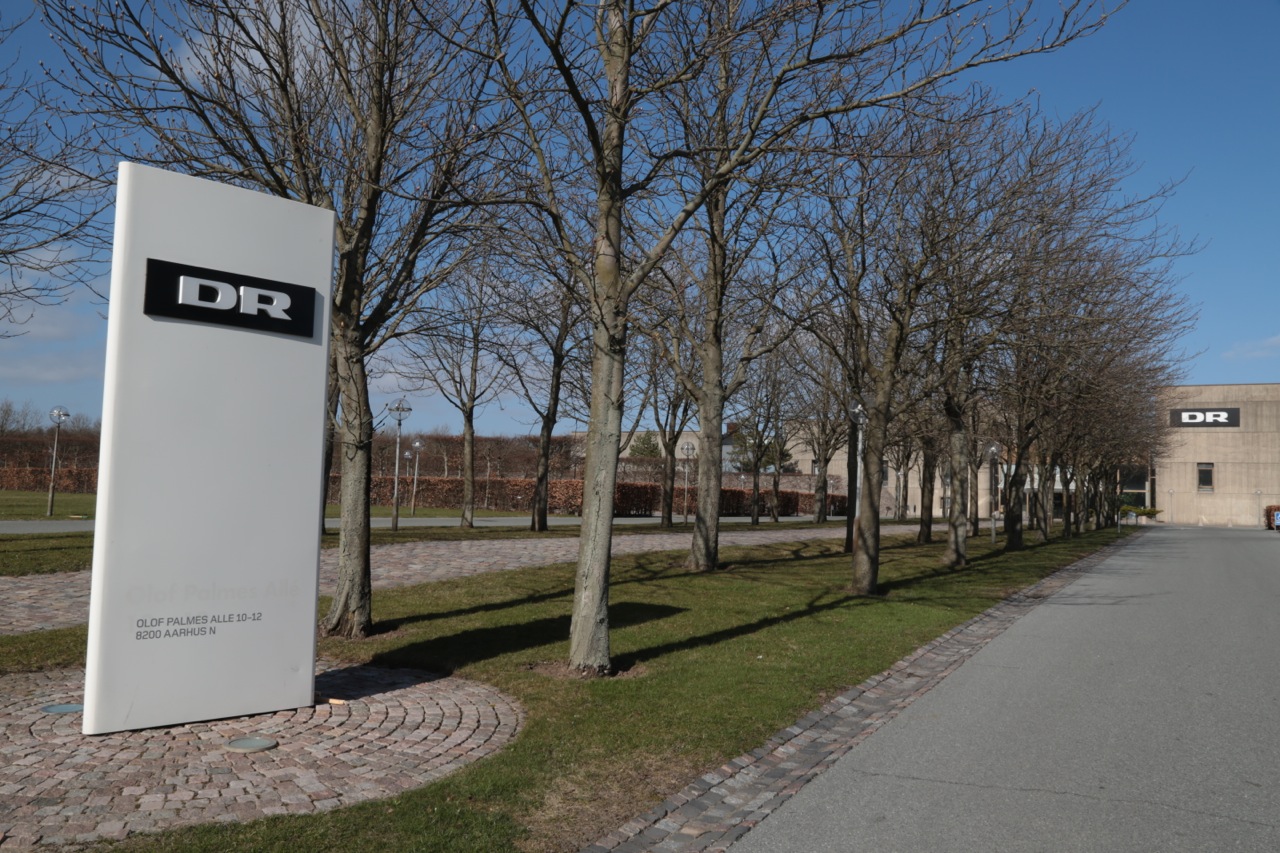
Welcome to the Aarhus studios and offices of DR - Danish Broadcasting.

DRExterior

On a Friday morning in April, I spent the day there to teach about leadership and success. To say I was welcomed would be an understatement.  Take a look at the front door! That poster, announcing my morning talk to the full staff, was not only there, but everywhere around the building.

DRDoor

I had been asked to talk to DR employees about a successful, creative and competitive workplace, with both the joys and the demands it places on people. In fact, the talk was titled "Surviving Success."  The shot below is from the back of the gathering.  I'm that tiny spot in the front right corner.

DRMorningWide

Fortunately, English is a second (or third or fourth!) language for many Danes, because my Danish is quite limited.  It's so limited, I told the group, that I knew only a few Danish words: "tusen takk" -- which means "thank you very much" and "velkommen," which is "welcome."  But for this day, I had learned a new and very powerful Danish word.  Here it is:

Arbejdsglæde

It is the Danish word for "happiness at work."  Isn't it interesting that there's no one-word equivalent for it in English?  We talk about motivation, or job satisfaction, but arbejdsglæde means more than that.  It means the workplace is a great place and people look forward to coming to work.  Great bosses guiding great employees create that culture of arbejdsglæde.

The DR staff applauded my attempt to pronounce the word.  (Sounds like "ah-BITES-glay-the")  Later that day, I applauded their managers for their focus on leadership, during our daylong workshop.

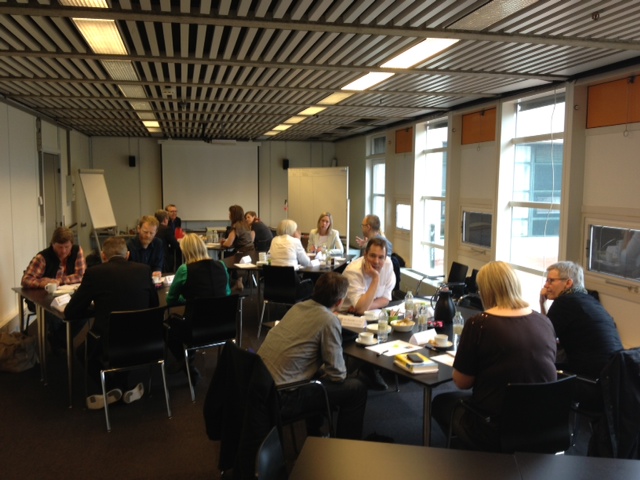
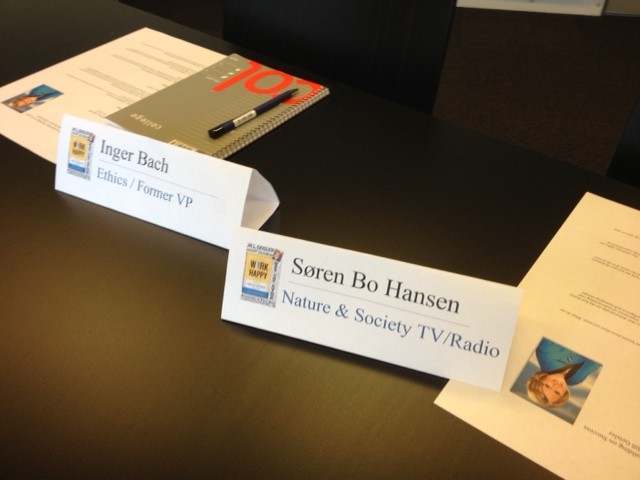
DRWorkshop These are the top leaders of various aspects of DR's news and information programming. We talked about their values and how values lead to the choices they make every day as leaders. We focused on communication, collaboration and the development of successful and happy staff.   DRNameplates   As you can tell from the extra care DR took to emphasize the positive, right down to putting an image of "WORK HAPPY: WHAT GREAT BOSSES KNOW" on the manager's name cards, the word "arbejdsglæde" might have been new to me, but it's in the leadership lexicon of this team.    
Read More

Teaching Great Bosses in Aarhus and London

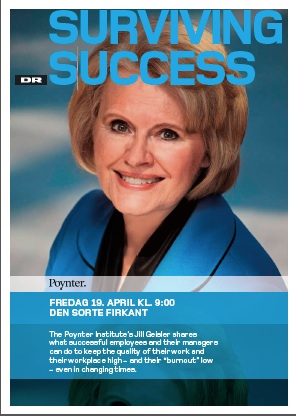
Surviving SuccessI'm off to Europe for two weeks, working with managers from two organizations who are using "WORK HAPPY: WHAT GREAT BOSSES KNOW" as part of their leadership development.

My first stop will be in Aarhus, Denmark for DR, the Danish Broadcasting Corporation.  I'll start the day with a talk to 150 staff members.  The topic, as you can see from the poster, is "Surviving Success."  The idea came after conversations about the good work that's being done there, and how organizations can continue to keep performance high without burning people out.

After that morning staff talk, I'll spend the day with top regional managers of DR's various units in a leadership workshop.

AP_RGBFrom Aarhus, I travel to London.  There, I'll spend three days with editors from the Associated Press, who are coming in from a variety of European cities. I've been assisting the AP leaders with training for several years now, both in the US and overseas.

Journalism organizations are experiencing significant change -- with reorganization and innovation as key challenges and opportunities.  That's why communication, collaboration, conflict resolution and change management are essential skills for leaders.  But they're skills that leaders in all organizations must develop in order to be truly great bosses.  
Read More